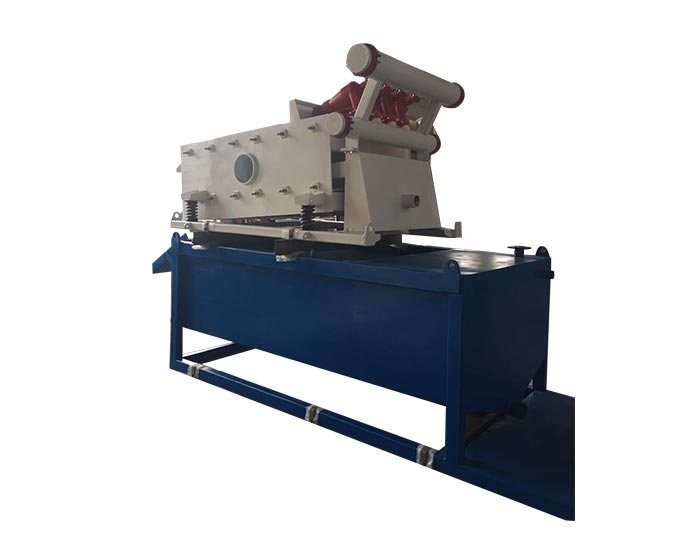
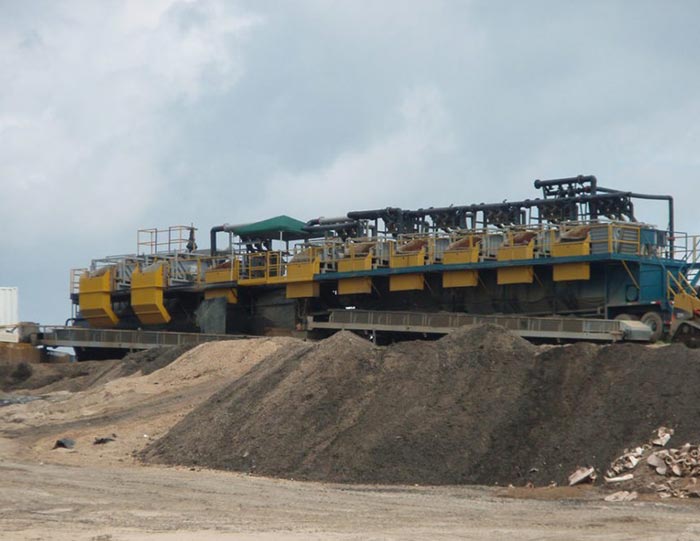
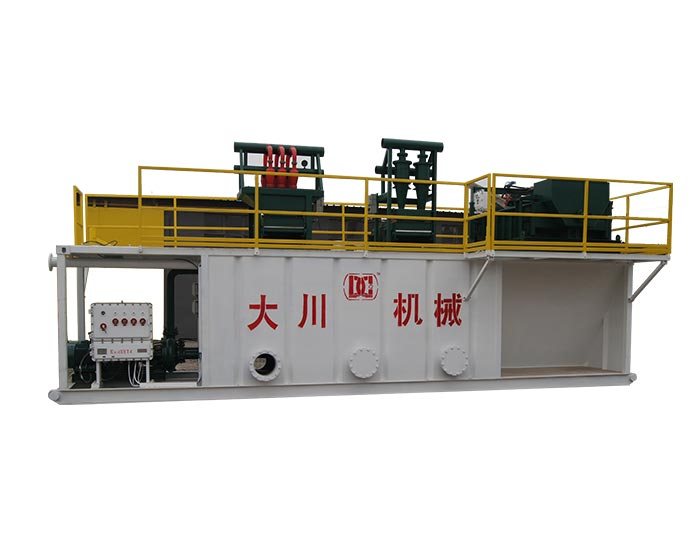
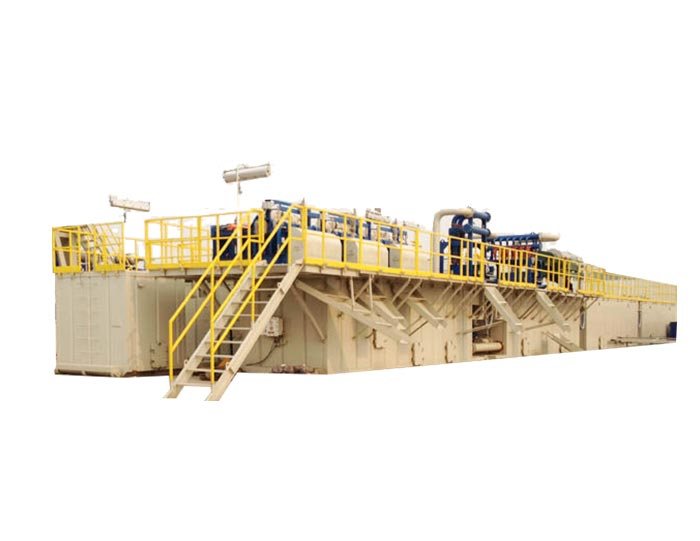
Efficient drilling fluid management is an essential part of modern drilling operations. During the drilling process, formation gas can enter the circulating mud and become trapped as small bubbles, affecting mud density, viscosity, hydraulic performance, and overall drilling stability. For this reason, gas removal is an important stage of solid control. A vacuum degasser is designed to separate invaded gas from drilling mud efficiently, helping restore the desired properties of the fluid before it continues through the treatment system. By combining negative pressure, high-speed fluid movement, and efficient gas-liquid separation, this equipment provides an important solution for solid control equipment used in drilling operation.
What Is a Vacuum Degasser?
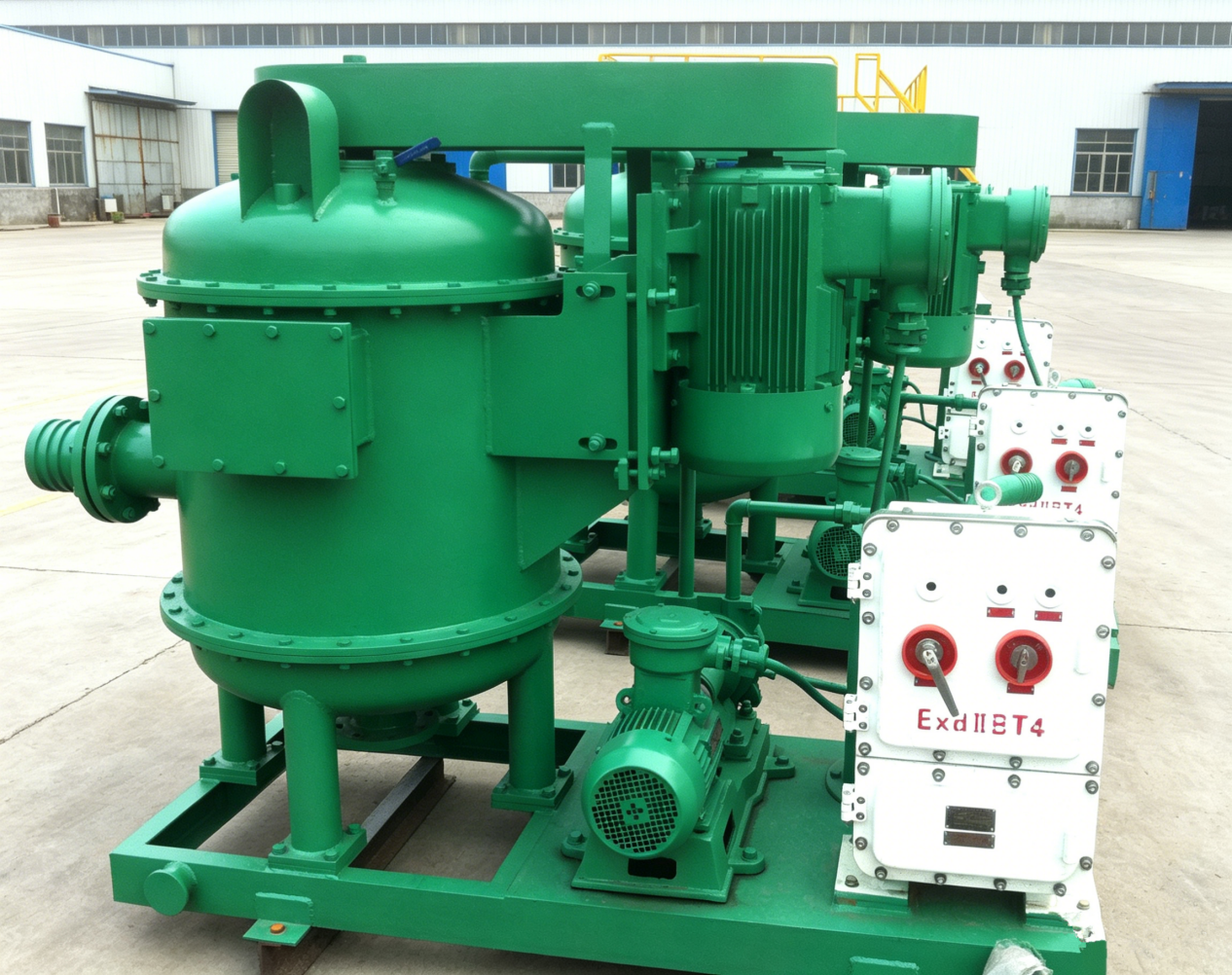
A vacuum degasser is a specialized drilling fluid treatment machine used to remove entrained and invaded gas from drilling mud. When drilling fluid circulates through a well, formation gas can enter the mud and become dispersed throughout the fluid. If the gas is not removed, it may reduce the effective density of the mud and change its viscosity and other physical properties.
The main purpose of a vacuum degasser is to create a negative-pressure environment that encourages gas to escape from the drilling fluid. The mud is exposed to the vacuum while being distributed and agitated by a rotating system. Gas bubbles are broken and released, and the separated gas is then discharged from the equipment.
After degassing, the treated drilling mud can return to the circulation system or continue to other stages of treatment. In this way, the degasser works as an important part of a complete drilling fluid management process rather than operating as an isolated machine.
How Does a Vacuum Degasser Work?
Understanding the working process is important when evaluating the performance of a vacuum degasser. The basic principle combines negative pressure with mechanical movement to promote rapid gas-liquid separation.
First, gas-contaminated drilling mud enters the equipment through the inlet. A vacuum system creates negative pressure inside the degassing chamber. Under reduced pressure, the gas trapped in the mud can separate more easily from the liquid.
The drilling mud then passes through the rotating system. According to the supplied product design, the mud hits the wall through openings in the rotor at high speed. This action thoroughly breaks the bubbles and increases the exposed surface area of the drilling fluid. As the bubbles break, gas can escape more efficiently under the vacuum condition.
The separated gas is drawn away by the vacuum system, while the treated drilling mud is discharged from the equipment. This continuous process allows the vacuum degasser to process drilling fluid without interrupting normal circulation.
According to the product specifications, the degassing efficiency can reach 95% or higher, making the equipment suitable for applications where efficient gas removal is required.
How Does Negative Pressure Improve Degassing?
Negative pressure is one of the most important technical features of a vacuum degasser. When the pressure surrounding the drilling fluid is reduced, gas can escape from the liquid more readily.
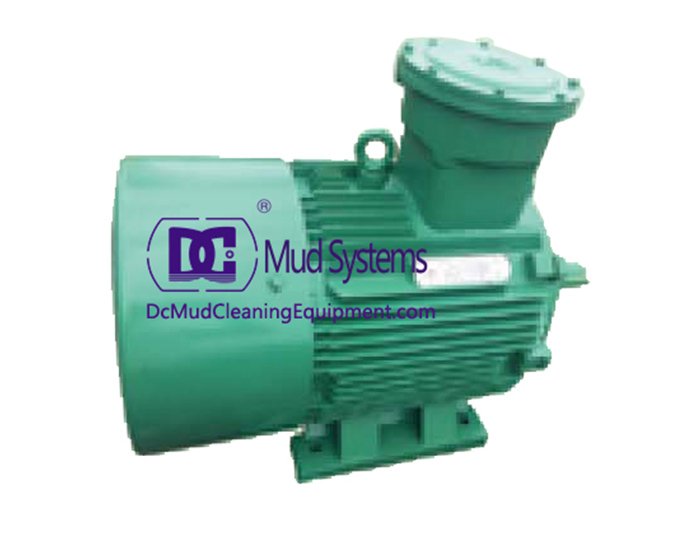
The equipment uses a water-ring vacuum pump to generate the required vacuum. During operation, the water-ring vacuum pump remains in an approximately isothermal condition. This operating characteristic makes it suitable for suction of flammable and explosive gases while providing reliable performance.
Depending on the model, the specified vacuum range varies from approximately -0.02 to -0.065 MPa. The appropriate vacuum level is determined by the equipment configuration and application requirements.
The combination of negative pressure and mechanical fluid movement is particularly important. Simply creating a vacuum is not enough to achieve efficient degassing if the mud is not adequately exposed to the low-pressure environment. The rotor therefore plays an important role in distributing the fluid and breaking the entrained bubbles.
How Does the Rotor Improve Gas Separation?
The rotor is another key component influencing the performance of the vacuum degasser. When contaminated drilling mud enters the treatment chamber, the rotor moves the fluid at high speed.
The supplied product design allows drilling mud to hit the wall through the rotor window at high speed. This process helps break the bubbles thoroughly and increases the contact between the mud and the vacuum environment.
As a result, gas can separate from the liquid more effectively. The combination of rotor action and negative pressure is one of the reasons the equipment can achieve a high degassing efficiency.
This mechanical process also allows the equipment to continuously process drilling fluid. Instead of relying on passive gas release, the vacuum degasser actively creates suitable conditions for gas separation.Why Is Gas-Water Separation Important?——H2
Efficient gas removal also requires proper handling of the separated gas and water. The product is equipped with a gas-water separator designed to prevent water and gas from being discharged simultaneously.
This feature helps maintain a clear discharge path and prevents the discharge pipe from becoming blocked. A clear discharge pipe is important for continuous operation because accumulated liquid or impurities could otherwise interfere with the exhaust process.
Therefore, the performance of a vacuum degasser depends not only on the vacuum pump and rotor but also on the complete gas discharge and separation arrangement.
What Is a Vertical Vacuum Degasser?
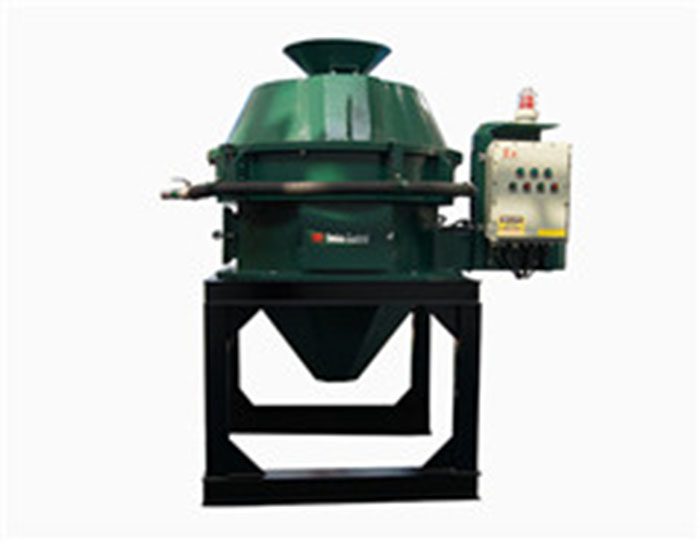
A vertical vacuum degasser is a vertical configuration of vacuum degassing equipment designed for continuous drilling fluid treatment. Its structure combines the degassing chamber, rotating mechanism, vacuum system, and discharge components into an integrated unit.
The vertical arrangement can be suitable for drilling fluid systems where equipment layout and continuous processing need to be considered together. Depending on the project requirements, a vertical vacuum degasser can be integrated with other drilling fluid treatment machines to create a complete solids control system.
Its primary function remains the same: contaminated mud enters the equipment, negative pressure encourages gas separation, the rotating system helps break bubbles, and the separated gas is removed while treated mud continues through the system.
How Does a Vacuum Degasser Fit into Solid Control Equipment?
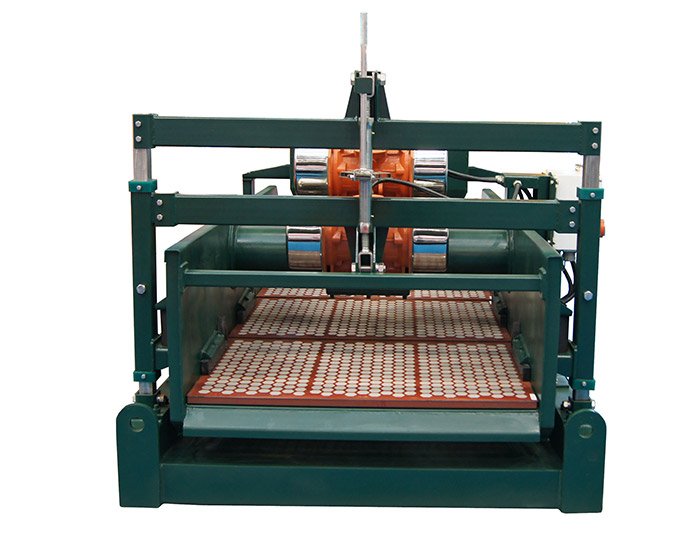
A drilling fluid system normally includes multiple types of solid control equipment, with each machine performing a different treatment function. The shale shaker generally removes larger drill cuttings, while a vacuum degasser focuses on removing entrained gas.
After gas removal, the drilling fluid can continue to desanders, desilters, mud cleaners, or centrifuges for additional solids separation. Pumps and mud tanks support fluid circulation, storage, and transfer throughout the system.
A simplified treatment sequence may therefore include:
Shale Shaker → Vacuum Degasser → Desander → Desilter → Mud Cleaner/Centrifuge
The actual system configuration can vary according to drilling conditions, mud properties, and required treatment performance. The important point is that gas removal and solids removal can be handled by different machines, allowing the complete solid control system to operate more efficiently.
How Does a Vacuum Degasser Support Drilling Fluid Treatment?
Gas contamination can affect the physical properties of drilling mud. If gas remains in the circulating fluid, the effective density may decrease, while viscosity and hydraulic behavior can also change.
A vacuum degasser helps restore the desired mud properties by removing invaded gas. This can support more consistent drilling fluid performance and improve the conditions for subsequent treatment.
Stable drilling fluid is important for carrying drilled cuttings, controlling formation pressure, supporting wellbore stability, and maintaining efficient circulation. Therefore, gas removal is not simply an additional treatment step; it contributes to the overall management of drilling fluid quality.
For solid control equipment used in drilling operation, maintaining stable mud conditions can also help different treatment stages work more consistently.
How to Choose the Right Vacuum Degasser Unit?
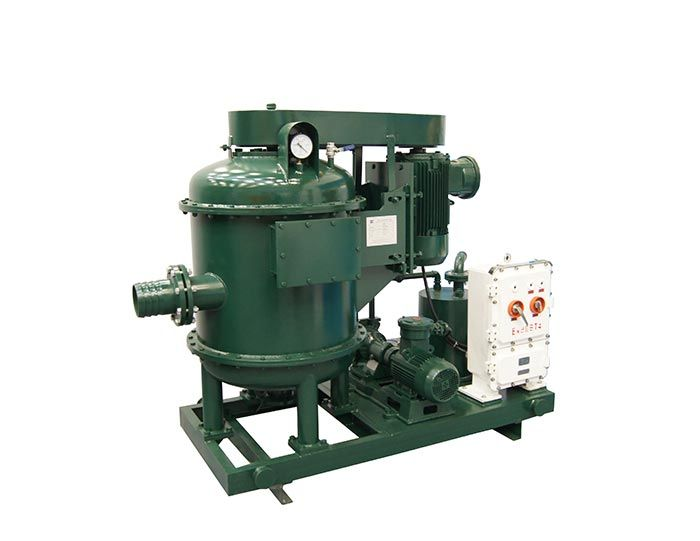
A vacuum degasser unit should be selected according to the actual drilling fluid flow rate, gas contamination level, vacuum requirements, installation conditions, and overall system configuration.
The supplied product range includes four models: DCZCQ240, DCZCQ270, DCZCQ300, and DCZCQ360. Their maximum treating capacities are up to 240 m³/h, 270 m³/h, 300 m³/h, and 360 m³/h respectively.
The main diameter ranges from 700 mm to 1000 mm, while motor power ranges from 15 kW to 37 kW. Vacuum power ranges from 2.2 kW to 7.5 kW. The equipment can be supplied with electrical specifications of 380V/50Hz, 460V/60Hz, or customized configurations.
Other factors such as inlet and outlet diameter, equipment dimensions, weight, and required vacuum should also be considered. For example, the DCZCQ240 has a treating capacity of up to 240 m³/h, while the larger DCZCQ360 can process up to 360 m³/h.
Choosing a suitable vacuum degasser unit according to actual drilling conditions helps avoid insufficient processing capacity and allows the equipment to work more effectively with other treatment machines.
The performance of a drilling fluid system depends not only on individual equipment but also on professional system matching, manufacturing quality, technical support, and after-sales service. Tangshan Dachuan Machinery Co., Ltd. focuses on the production, sales, after-sales service, and maintenance of petroleum drilling mud cleaning equipment and trenchless mud recovery systems.
Its main products include vacuum degasser, shale shaker, desander, desilter, mud cleaner, mud gas separator, mud agitator, centrifugal pump, shear pump, flare ignition device, jet mud mixer, mud tank, water tank, diesel tank, vertical cutting dryer, and other drilling fluid equipment. This comprehensive product range allows customers to build a complete solid control system according to their drilling requirements.
Dachuan Machinery is committed to matching equipment with customer requirements and providing high-quality, rapid, honest, and considerate service. Its goal is to supply advanced equipment and technology while providing drilling fluid systems, spare parts, and technical services to help customers maintain production efficiency.
The company has 85 staff members, including 15 senior engineers, 5 development personnel, and 15 senior artisans. With independent equipment development and manufacturing capabilities, Dachuan Machinery can develop and produce equipment according to different application requirements. The company also cooperates with professional institutes to support the high precision of exported equipment.
In addition, an experienced after-sales team provides technical consultation and service, helping customers with equipment operation, maintenance, spare parts, and system-related requirements.
If you are looking for a reliable vacuum degasser, vertical vacuum degasser, or complete vacuum degasser unit, Dachuan Machinery can provide suitable solutions according to your drilling fluid flow rate and system requirements. Contact us today to discuss your project, select the appropriate degassing equipment, and request a professional quotation for your drilling operation.

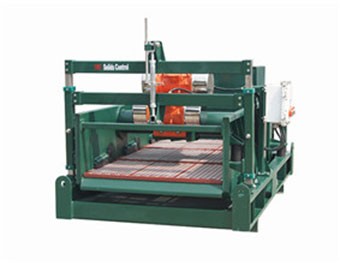 Linear Motion Shale Shaker In Drilling Rig
 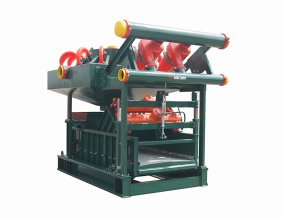 Oilfield Mud Cleaner
 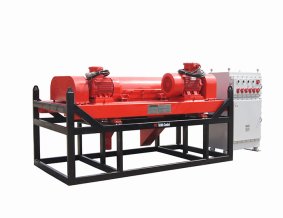 Drilling Fluid Decanter Centrifuge
 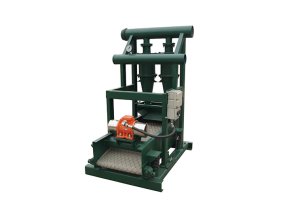 Drilling Mud Desander
 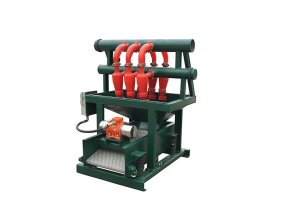 Hydrocyclone Desilter
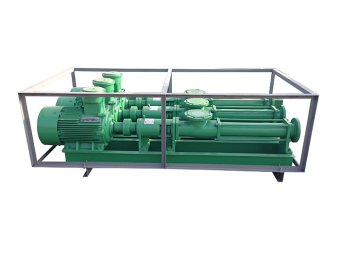
 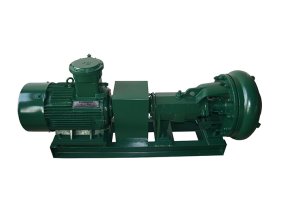 Centrifugal Pump/Centrifugal Mud Pump
 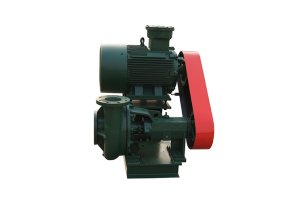 Shear Pump
 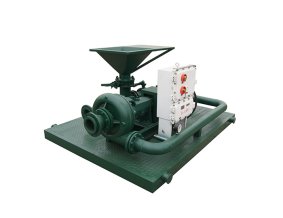 Jet Mud Mixer
 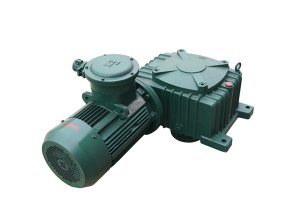 Horizontal Mud Agitator
 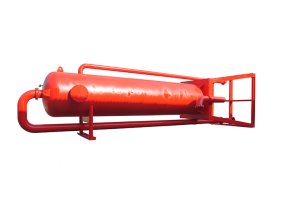 Constant Pressure Drilling Fluid Mud Gas Separator
 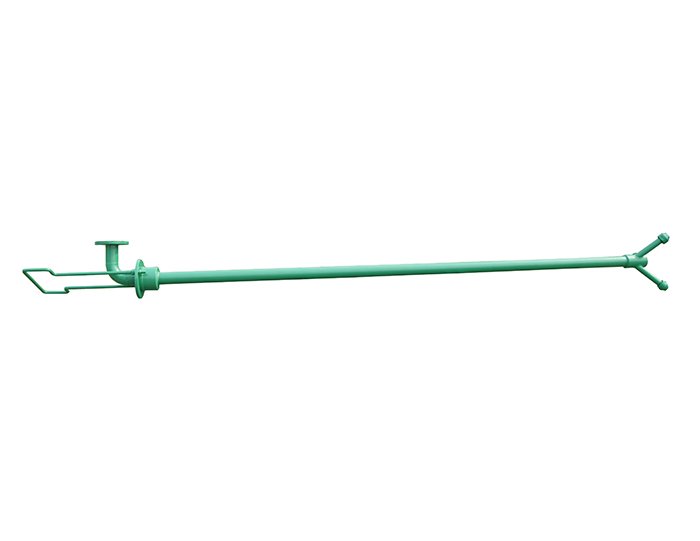 Mud Gun
  Mud Tank
 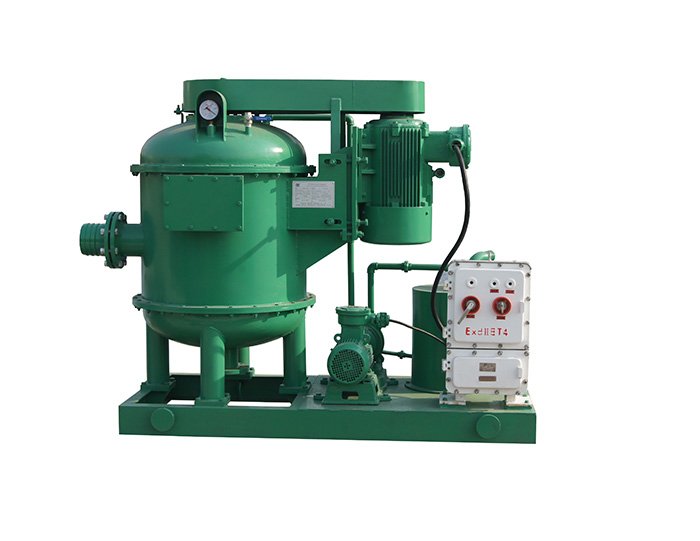 Solids Control System Vacuum Degasser
 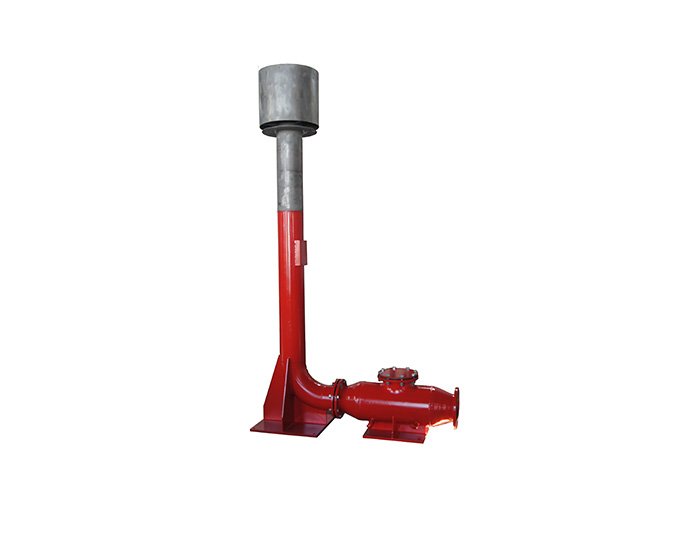 Flare Ignition Device
 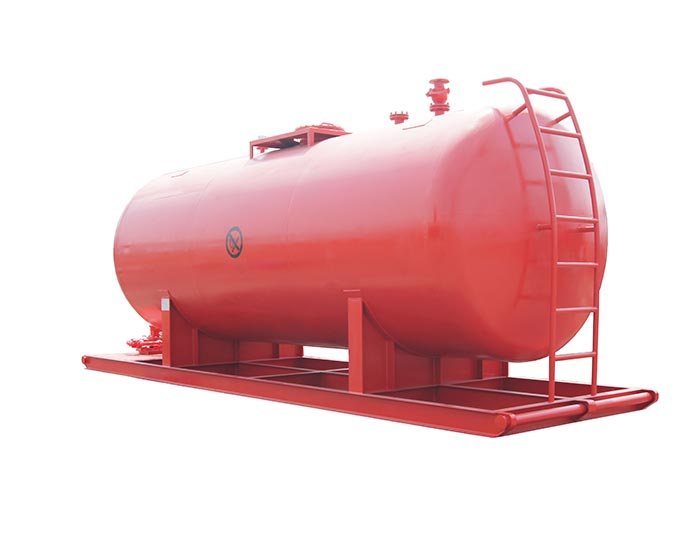 Diesel Tank
 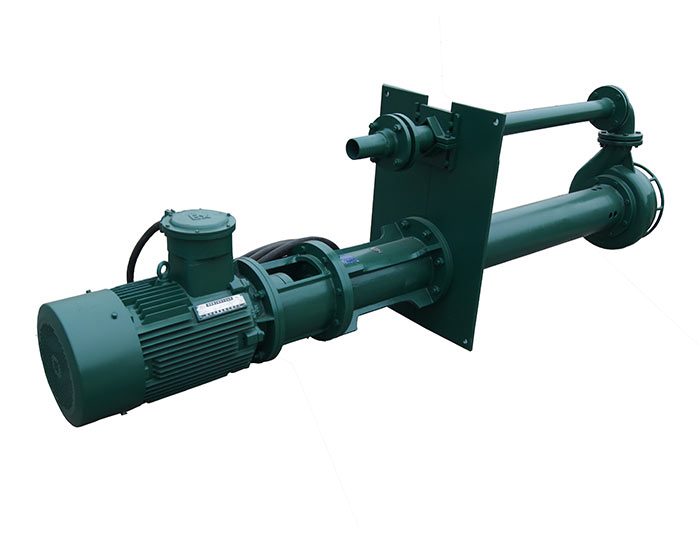 Submersible Slurry Pump